Penetrating, non-film-forming stains that protect the wood from the inside out — not paint that sits on top and eventually peels. We preserve your fence's natural wood, so maintenance stays simple for years to come.
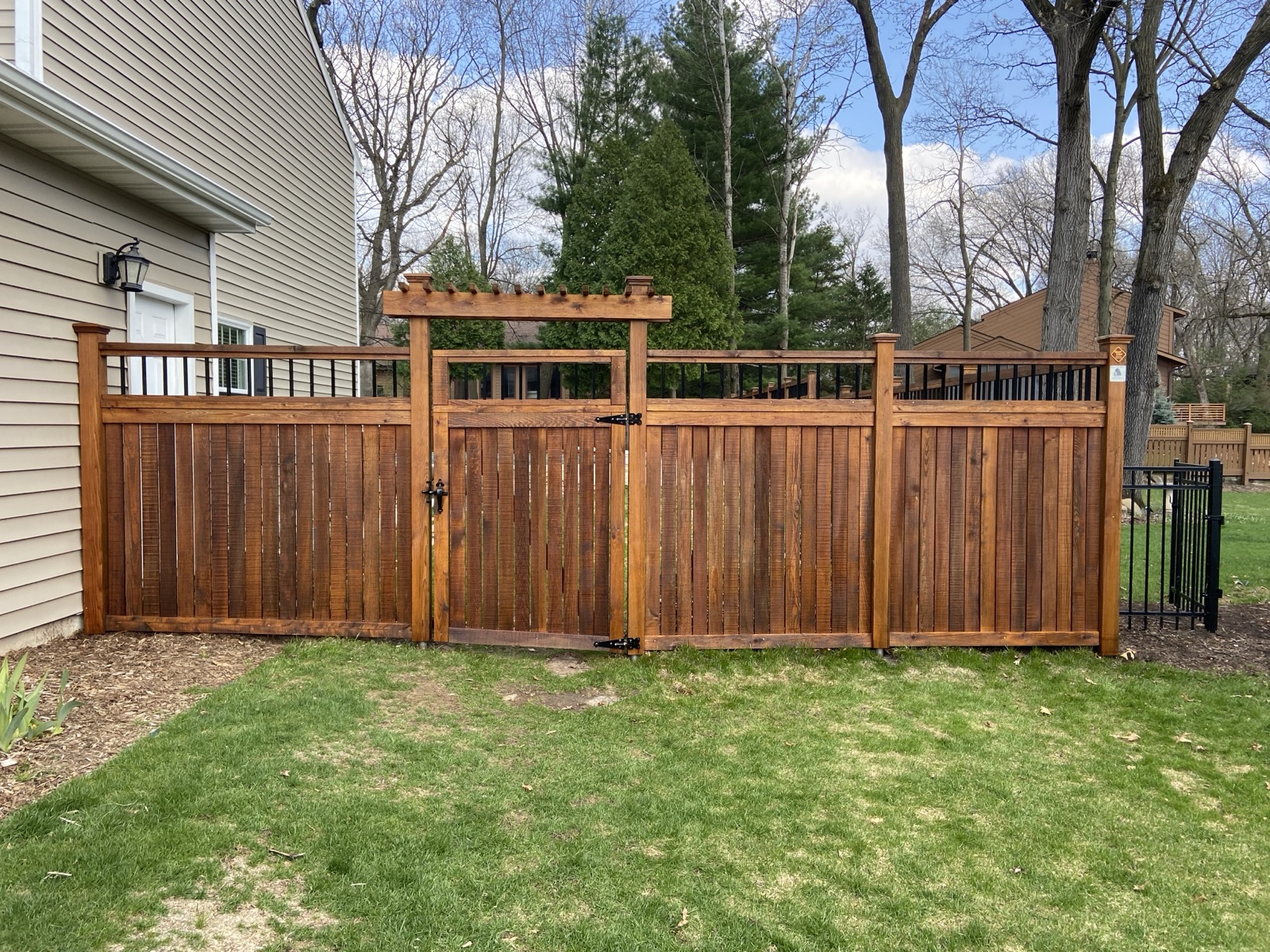
A wood fence takes more abuse than almost anything else on your property — full sun exposure, driving rain, freezing temps, and wet spring thaws. The biggest mistake homeowners make is treating it like a painted surface. Paint sits on top of the wood. When it fails, it peels, traps moisture underneath, and turns a simple maintenance job into an expensive restoration.
We use non-film-forming, penetrating stains — oil-based formulas that soak into the wood fibers and work from the inside out. They resist moisture and UV without locking it in. They move with the wood as it expands and contracts through Wisconsin's seasons. And when it's time for a fresh coat, you clean and re-apply — no stripping, no sanding, no starting over.
Whether your fence is brand new cedar that needs its first protective treatment, or a gray and weathered board-on-board that looks like it's past saving — we know what it takes to get it right.
Three focused services built around one goal — wood that looks great and lasts as long as possible.
New wood is the easiest to protect — and the most important time to do it right. We prep the surface, let it dry properly, and apply a penetrating oil-based stain that locks moisture out before weathering gets a foothold. Cedar, pine, pressure-treated, spruce — each species gets the product and prep it needs.
Free estimate — call to discuss your fence
Gray, silver, cracking — weathered fences look rough but most of them have plenty of life left. We strip failed coatings, treat mold and mildew, restore the grain, and apply fresh penetrating stain. The transformation is usually dramatic. And because we're using the right product, the next maintenance cycle will be easy.
Custom quote — condition determines scope
For fences that are in good shape and just need ongoing protection. We apply a deep-penetrating sealer — clear or lightly tinted — that repels water, slows UV graying, and keeps the wood stable through freeze-thaw cycles. A simple way to extend your fence's life without changing its natural look.
Free estimate — call (608) 413-3628
Not all stains are equal. Here's why the type of product we use makes all the difference for your fence long-term.
A non-film-forming stain soaks into the wood fibers rather than forming a surface film. This means it can't peel, crack, or blister — because there's no film to fail. The protection lives inside the wood, not on top of it. Paint and solid-body stains form that film, which is why they look great at first but require stripping when they eventually break down.
Wood expands in heat and humidity, contracts in cold. A fence board in Wisconsin goes through that cycle hundreds of times. Penetrating oils flex with the wood — they don't fight it. That's why properly applied oil-based stains last 3–5 years on a fence before needing a fresh coat, even in our climate.
This is the part homeowners love most. When a penetrating stain fades, you clean the fence and re-apply — that's it. No chemical stripping, no sanding to bare wood, no expensive prep work. You get all the look and protection of a fresh stain job without starting from scratch. That's what easy maintenance actually means.
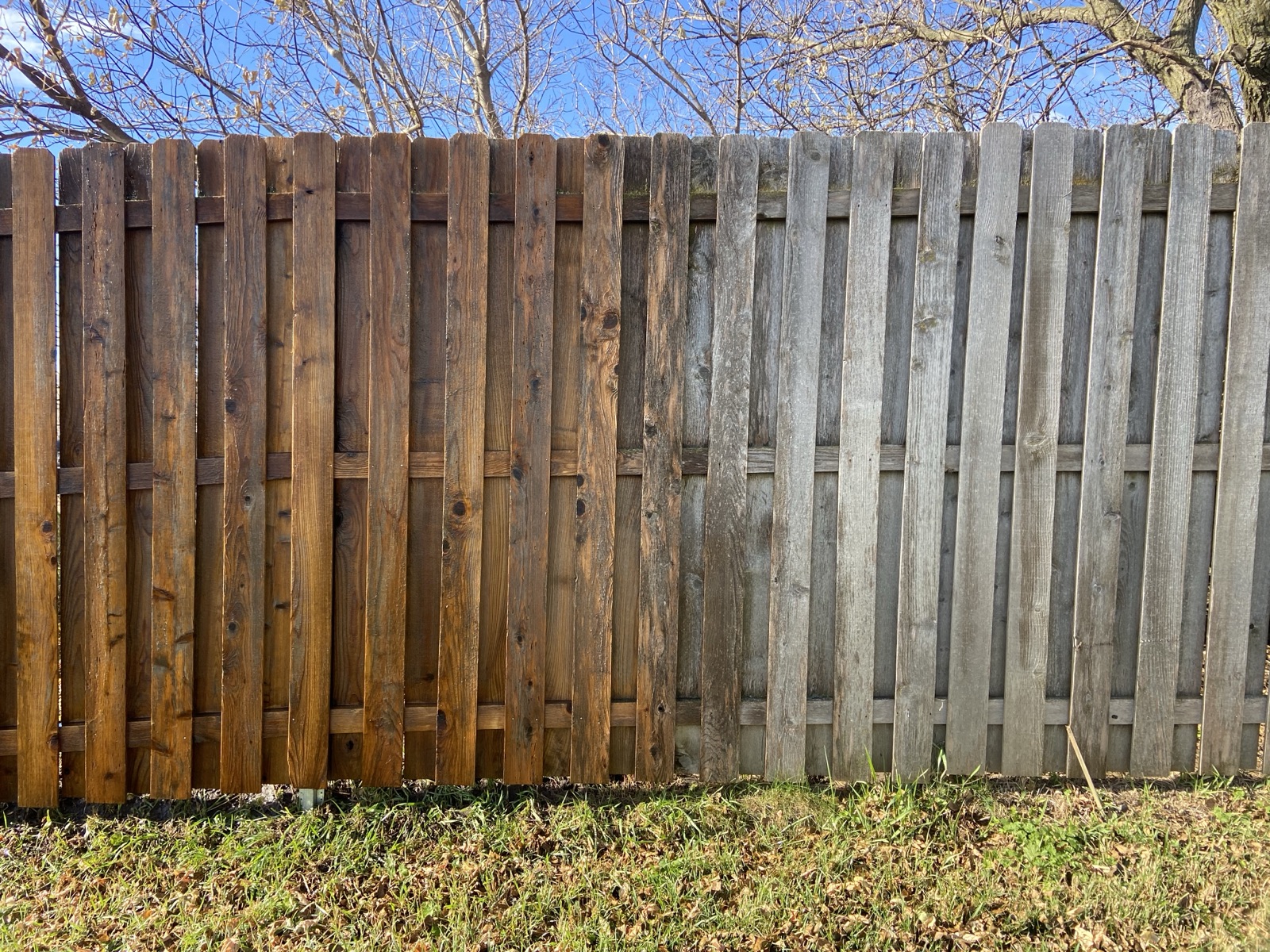 Before
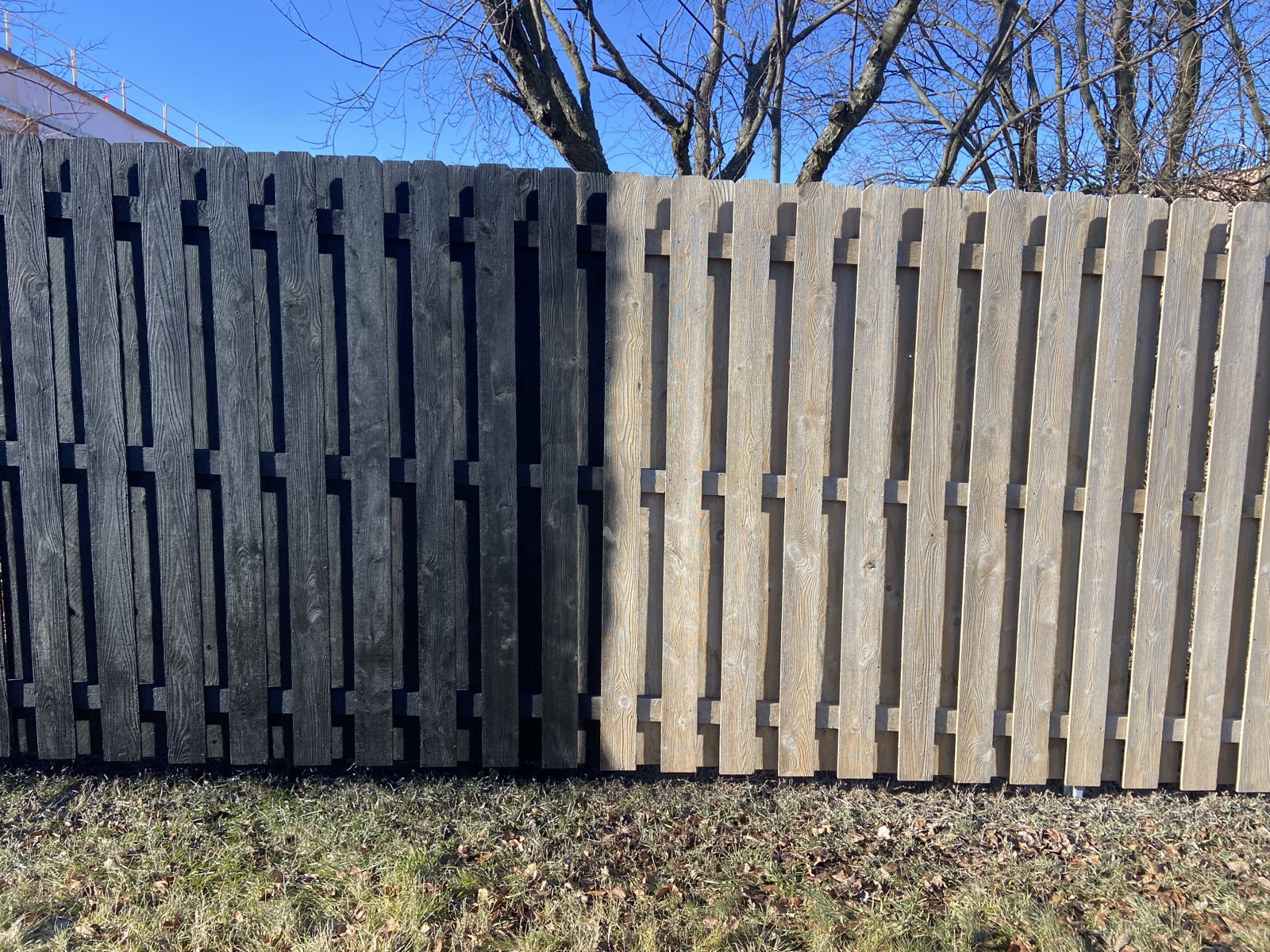 After
After
Most homeowners are surprised how much their fence can recover. Silver-gray wood isn't dead wood — it's weathered wood with the surface oils stripped out by UV and moisture. The structure is usually still solid.
Our refinishing process cleans the surface down to bare, open grain, treats any mold or mildew, and then applies a quality penetrating stain that locks in the protection. The result is a fence that looks new and, more importantly, one that's built for easy maintenance going forward.
Wood staining and sealing is all we do. That focus means better product knowledge, better prep, and results that hold up longer.
We don't paint houses, install decks, or do remodeling on the side. Staining and sealing wood is our entire business. That means we know every product, every prep method, and every wood species — and we're not guessing on your fence.
A penetrating stain is only as good as the surface it goes into. We power wash, brighten, and fully dry every fence before product touches it. Skipping prep is how stain fails in year one — we don't cut that corner.
Some fences need a full refinishing. Some just need a fresh coat. We'll tell you which one yours needs — and why — before we write up a quote. No upselling work that isn't necessary.
Free estimates — fast scheduling — penetrating stains that last.
Answers to what Madison homeowners ask us most about fence staining, refinishing, and maintenance.
Fence staining in Madison typically runs $1.50–$3.00 per linear foot for a standard 6-foot privacy fence, depending on condition, wood type, and total footage. Heavily weathered fences that need stripping or deep restoration are quoted separately. We always provide a free on-site estimate before any work begins — no surprises.
Stain, every time — specifically a penetrating, non-film-forming stain. Paint and solid-body coatings sit on top of the wood and form a surface film. When that film cracks, water gets underneath and you're dealing with peeling, blistering, and expensive prep before your next coat. A penetrating stain soaks into the wood fibers, can't peel, and when it fades, you clean and re-coat. Simple.
Most wood fences in Wisconsin need restaining every 2–4 years, depending on sun exposure, wood species, and the original stain quality. South- and west-facing fences see more UV and typically need attention sooner. The good news: with a penetrating stain, maintenance is easy — clean the surface and re-apply. No stripping, no sanding to bare wood, no starting from scratch.
It depends on the paint condition. If paint is peeling or failing, it needs to be fully stripped before a penetrating stain can absorb into the wood — we handle this as part of a full fence restoration. If the existing paint is solid and adhering well, a compatible solid-body stain can be applied over it. We'll look at the fence and give you an honest read before writing anything up.
For cedar in Wisconsin, we reach for semi-transparent, oil-based penetrating stains — products like Armstrong Clark or TWP (Total Wood Preservative). Oil-based formulas soak into cedar's open grain and provide exceptional moisture and UV resistance through our freeze-thaw cycles. They keep cedar's natural color and grain visible, which is the whole point of choosing cedar in the first place. Semi-transparent gives you protection plus a warm, rich tone without hiding the wood.
Yes — and doing both together often saves on mobilization costs. Many of our customers book their deck and fence at the same time, especially when they want a consistent stain color across both. We can match stain tones between your fence and deck or give each one a treatment suited to its specific wood and exposure. Call us and we'll talk through what makes sense for your property.
Fill out the form and we'll get back to you within one business day — no obligation, no pressure.
We serve all of Dane County. Find your city or give us a call.